

Gloss is the ability of a part's surface to reflect light specularly, and it is measured with a gloss meter in gloss units (GU). On injection molded parts it depends mainly on the material, the polish or texture of the mold, the mold temperature and the process settings, which is why it should be specified on the drawing and kept under control throughout production.
Gloss is one of the elements that define the appearance of a product, and one of the aesthetic parameters checked during quality control. In this article we explain what gloss means for injection molded parts, how it is assessed and which factors influence it.
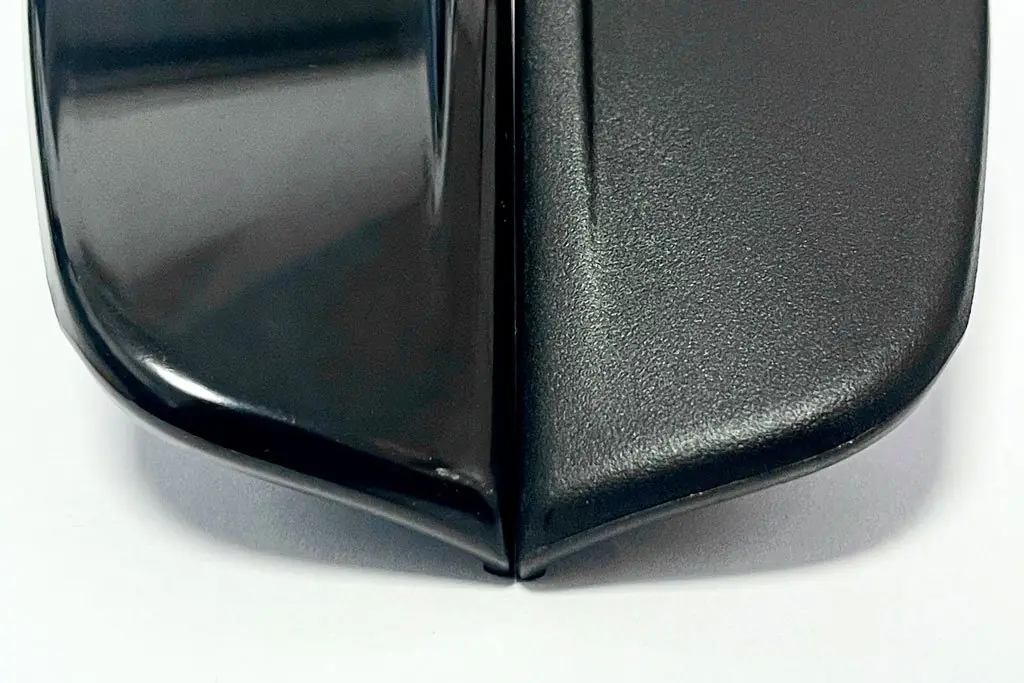
Gloss in injection molded parts: definition and measurement
Gloss is the ability of a surface to reflect light specularly, that is, to reflect incoming light in a concentrated way in the mirror direction, which gives a shiny appearance. A surface that scatters light in all directions looks matte instead.
The first way to assess gloss is visual inspection by quality control staff, who play a key role in this kind of aesthetic evaluation. To make it repeatable, inspectors work with reference samples approved by the customer and defined lighting and viewing conditions.
There is also a dedicated instrument: the gloss meter, which expresses gloss in GU (gloss units) relative to a reference standard. Measurements are taken at a defined angle: 60° is the general-purpose geometry, 20° is used for high-gloss surfaces and 85° for matte ones (ISO 2813, ASTM D523). Gloss is therefore a measurable parameter: the GU value, measuring angle and tolerance are set according to the part and stated on the drawing or in the specification.
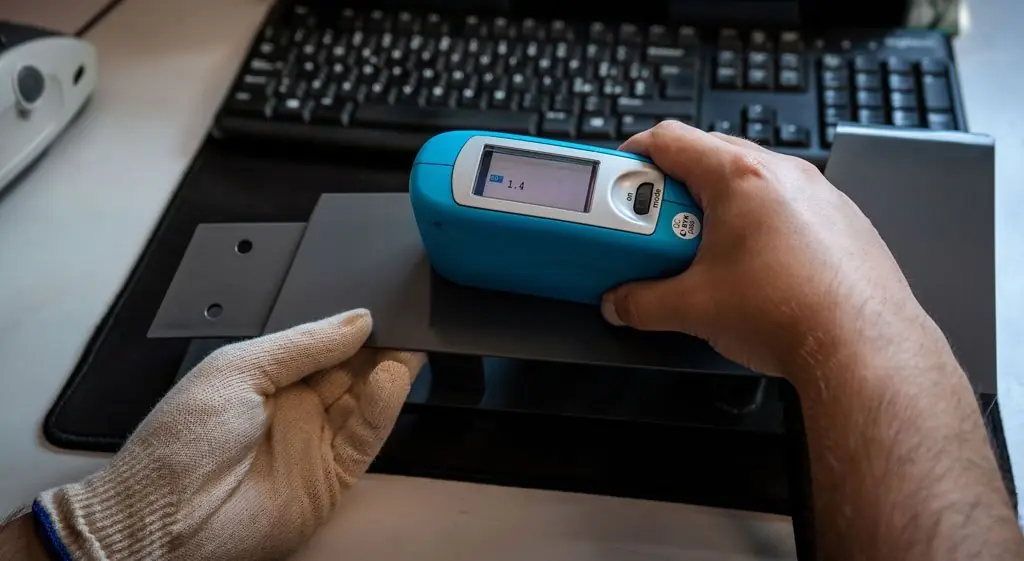
Together with color, gloss is a key aesthetic characteristic that contributes significantly to the overall look and the perceived quality of a product. Managing all the factors that affect it, however, is not easy. We look at them in the next section.
Factors that affect gloss
Many factors influence gloss, and they often interact. Still, it is possible to draw a broad distinction between the factors that affect the gloss of a cosmetic injection molded part.
Here is a summary, based on our experience, of the elements that can influence gloss:
- Material
- Mold design
- Mold steel
- Mold temperature control
- Surface finish (texture and grain)
- Surface treatments
- Pressure
Material
The choice of resin and its formulation is fundamental to achieving the required gloss level. For high-gloss applications, amorphous polymers with good flow are often chosen, such as ABS, PC or PMMA: they replicate the polished mold surface accurately and keep a brilliant appearance. Under the same conditions, semi-crystalline polymers tend to produce less glossy surfaces.
Additives matter too. Lubricants and flow promoters improve filling and reduce surface defects, which helps gloss. Mineral fillers and glass fibers, on the other hand, tend to reduce it because they can show at the surface; matting agents are also available when a satin effect is wanted.
Mold design
Mold design plays a crucial role in the final gloss of the part. Part geometry and wall thickness, gate type and location, surface finish and venting all affect how the molten plastic flows and solidifies. They determine defects that change gloss locally, such as flow lines, weld lines and sink marks. That is why cosmetic requirements should be considered from the mold design stage.
Mold steel
The type of steel used to build the mold also affects gloss. Surfaces that will be mirror-polished need very clean, homogeneous steels with few inclusions (for example electroslag remelted, ESR grades) that suit the polymer being molded. They also need good thermal conductivity and wear resistance, to withstand molding cycles and keep precise surface finishes over time, which is what keeps gloss consistent.
Mold temperature control
Controlling mold temperature is essential for optimal, consistent gloss. On a polished surface, a higher mold temperature lets the material replicate it better and generally increases gloss; a uniform temperature avoids glossier and duller areas on the same part and helps prevent warpage, shrinkage and surface defects. In our molding shop, every molding line has its own temperature control unit.
Surface finish (texture and grain)
The surface finish of the mold has a direct impact on part gloss. Polished surfaces, classified for example by SPI finish grades, reflect light more uniformly and give a glossier part; textures (chemical, laser or EDM textures, for example to VDI 3400) scatter light and give a matte or satin look. During molding, texture replication needs careful control because it also depends on process settings.
Surface treatments
After molding, parts can undergo surface treatments to change their gloss and durability, for example tumbling with fine abrasive media or the application of coatings. Clear coats, lacquers and polishing compounds create a smooth, reflective finish while protecting the surface from scratches, UV radiation and environmental degradation.
Injection pressure
Injection and packing pressure push the material against the mold surface: raising them makes the part replicate the finish and texture more closely, and gloss changes accordingly. Beyond a certain point, however, they make the mold parting lines more visible and can cause flash. Flash is unacceptable on a cosmetic part and, over time, damages the parting surfaces and shortens mold life.
When designing a cosmetic part, then, both aesthetic and technical aspects have to be considered. In injection molding, keeping gloss consistent while balancing part design, durability requirements and production constraints is a real challenge.
Gloss in injection molded parts: conclusions
Gloss in injection molded parts plays a decisive role in the look and perceived value of a product. As we have seen, the result depends on many factors: managing them together, from material selection to mold design and process settings, is what produces parts that not only look better but also deliver good performance and durability.
If you are developing a cosmetic part, see how we work in our plastic injection molding service.
Frequently asked questions
What is gloss on a plastic part?
Gloss is the luster of the surface, that is, its ability to reflect light specularly. The smoother the surface and the more faithfully it replicates a polished mold, the shinier the part looks.
How is gloss measured?
With a gloss meter, which gives the result in gloss units (GU) relative to a reference standard. The 60° geometry is the general-purpose one; 20° is used for high-gloss surfaces and 85° for matte ones (ISO 2813, ASTM D523).
Why can the same part have glossier and duller areas?
Because gloss depends on how well the resin replicates the mold surface, and that varies across the part. Differences in mold temperature, wall thickness, distance from the gate and packing pressure create gloss variation; flow lines, weld lines and sink marks are the most common causes.
How do you get a glossier molded part?
With a mirror-polished mold made from a suitable steel, an easy-flowing resin, often an amorphous one such as ABS or PMMA, and the right mold temperature and packing pressure. Fillers and glass fibers, on the other hand, tend to reduce gloss.
How do you get a uniform matte surface?
With a mold texture, produced for example by chemical etching, laser texturing or EDM (VDI 3400), or with matte resin grades. The texture should be chosen during mold design, because it requires larger draft angles.