

Industries we serve with plastic injection molding
Bemar Plast S.r.l. has been a contract injection molder since 1995, in San Giovanni Ilarione near Verona, Italy, producing technical components in engineering and commodity polymers for five core industries: automotive, electronics, rail, non-implantable medical and construction. Each industry has its own requirements for material, documentation and inspection: we assess them with your engineering team before quoting.
At a glance
- Core industries
- automotive, electronics, rail, non-implantable medical, construction
- What we make
- technical and cosmetic thermoplastic components
- Materials
- engineering and commodity polymers
- Presses
- 13, from 10 to 480 t (≈ 530 US tons), 2 two-shot
- Quantities
- 1,000 to 1 million parts a year per part number
- Molds
- designed in-house, built in Italy or China, or your own
- Quality
- ISO 9001:2015, IMQ No. 9190.BMRP
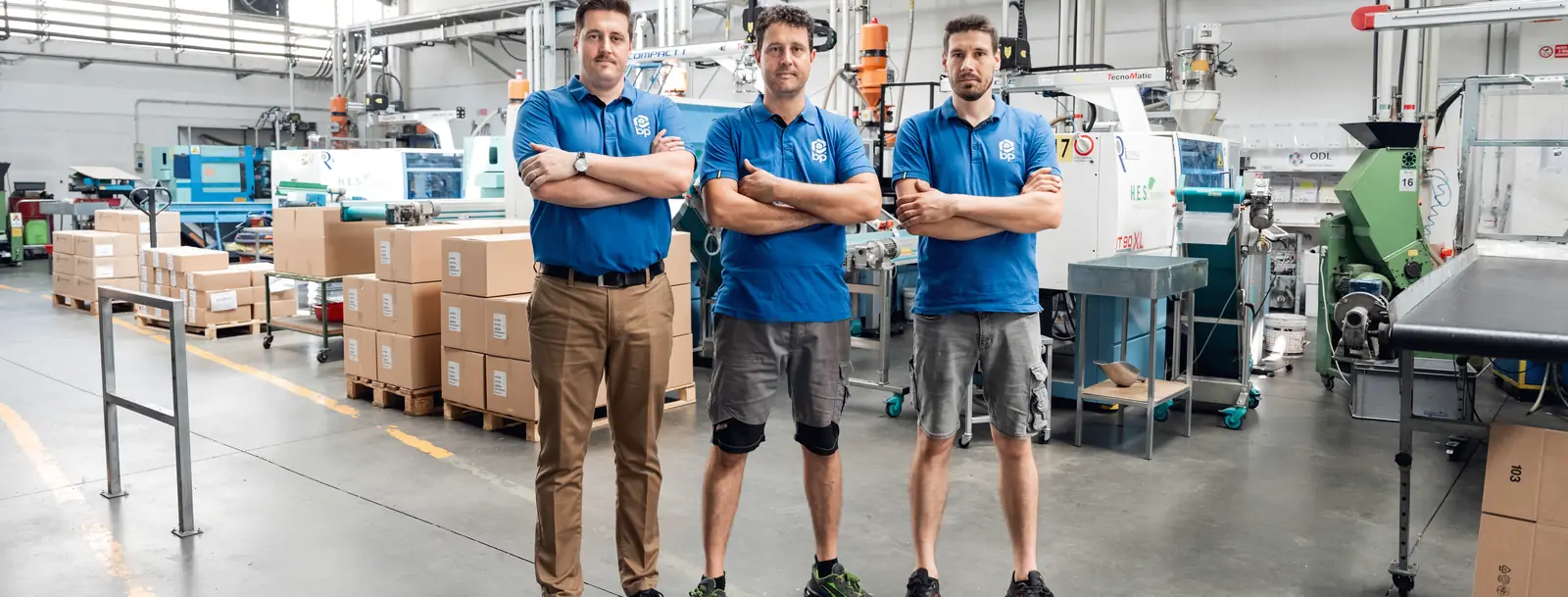
- Since 1995
- 5 core industries
- 13 presses, 10 to 480 t
- ISO 9001 since 2013
- All molding done in Italy
Why an Italian supplier
We mold every part in our own plant near Verona, Italy. For European companies, that means a short, transparent supply chain with a single point of contact.
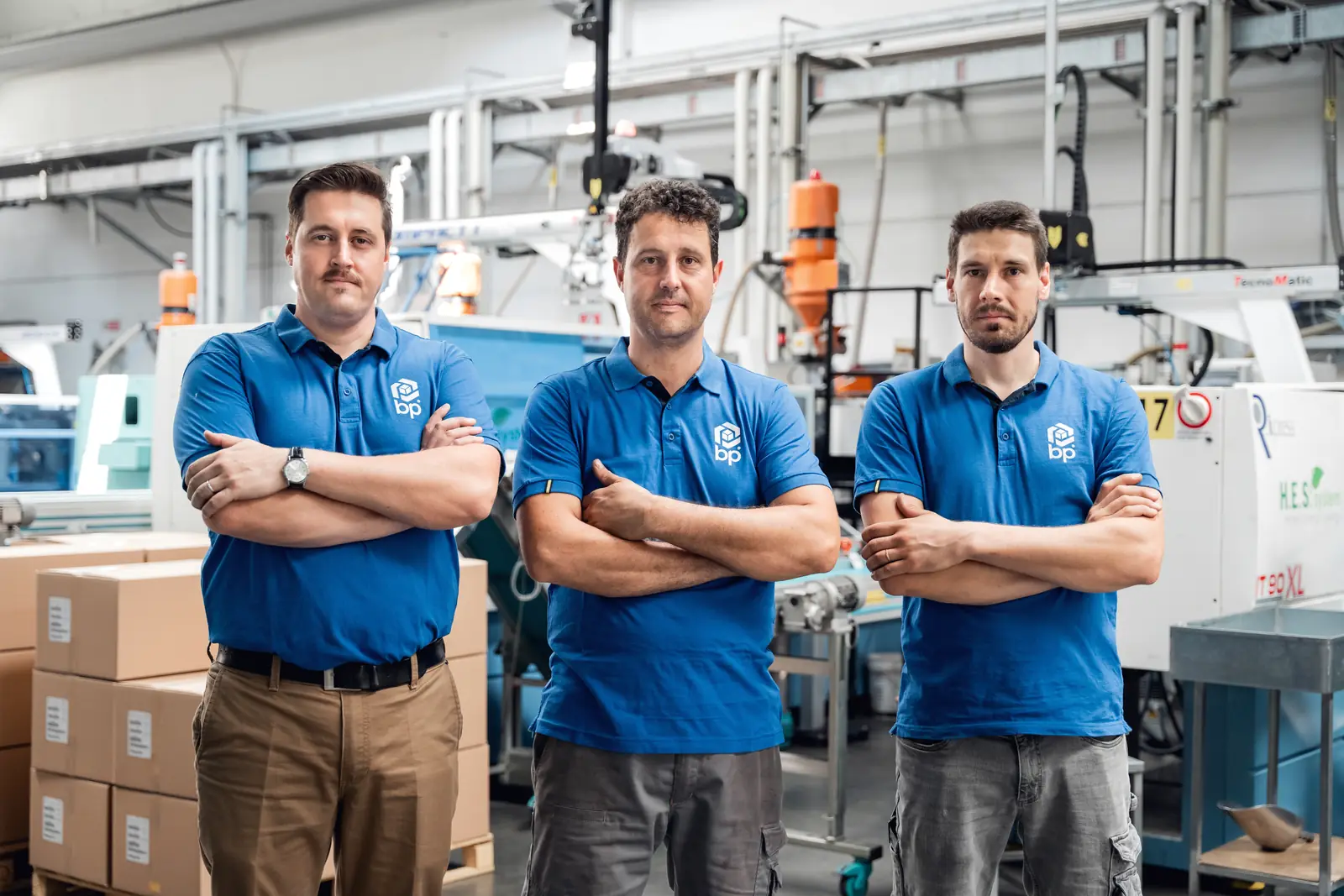
Every part molded in Italy
We mold every part in our plant in San Giovanni Ilarione, under an ISO 9001:2015 certified quality system, with documented dimensional inspection. 3D-printed prototypes are made in Italy too.
A European supply chain
For customers in the European Union: no customs formalities, Central European Time (CET), single-market rules. Customers outside the EU (UK, Switzerland, US, Canada): standard export customs procedures apply.
Molds built in Italy or China, your choice
On request we prepare a dual quote, Italy and Asia, so you can compare cost and lead time. Every mold is built by qualified partners to our technical specification; design approval, tryout and maintenance stay with us.
One technical point of contact
You talk directly to the people who design and mold your part, from feasibility to finished component.
How we handle each industry's requirements
Standards and specifications vary from industry to industry. Our method stays the same: clarify the requirements before quoting and document the result.
Requirements from your specifications
We start from your drawing and specifications: material, tolerances, appearance, required documentation and annual quantities.
Material chosen to meet the requirement
UL 94 flammability ratings, fire behavior to EN 45545-2, UV resistance, medical grades: these are properties of the material grade, documented by the resin manufacturer. We assess them with you before the mold and material are defined.
Measured samples
The first parts are measured on the KEYENCE IM-X1000 image measurement system and supplied with an inspection report, for your approval before series production.
Stated limits
In the medical field, we mold components for non-implantable applications, in a controlled industrial environment, not in a cleanroom. We do not normally mold high-performance specialty polymers.
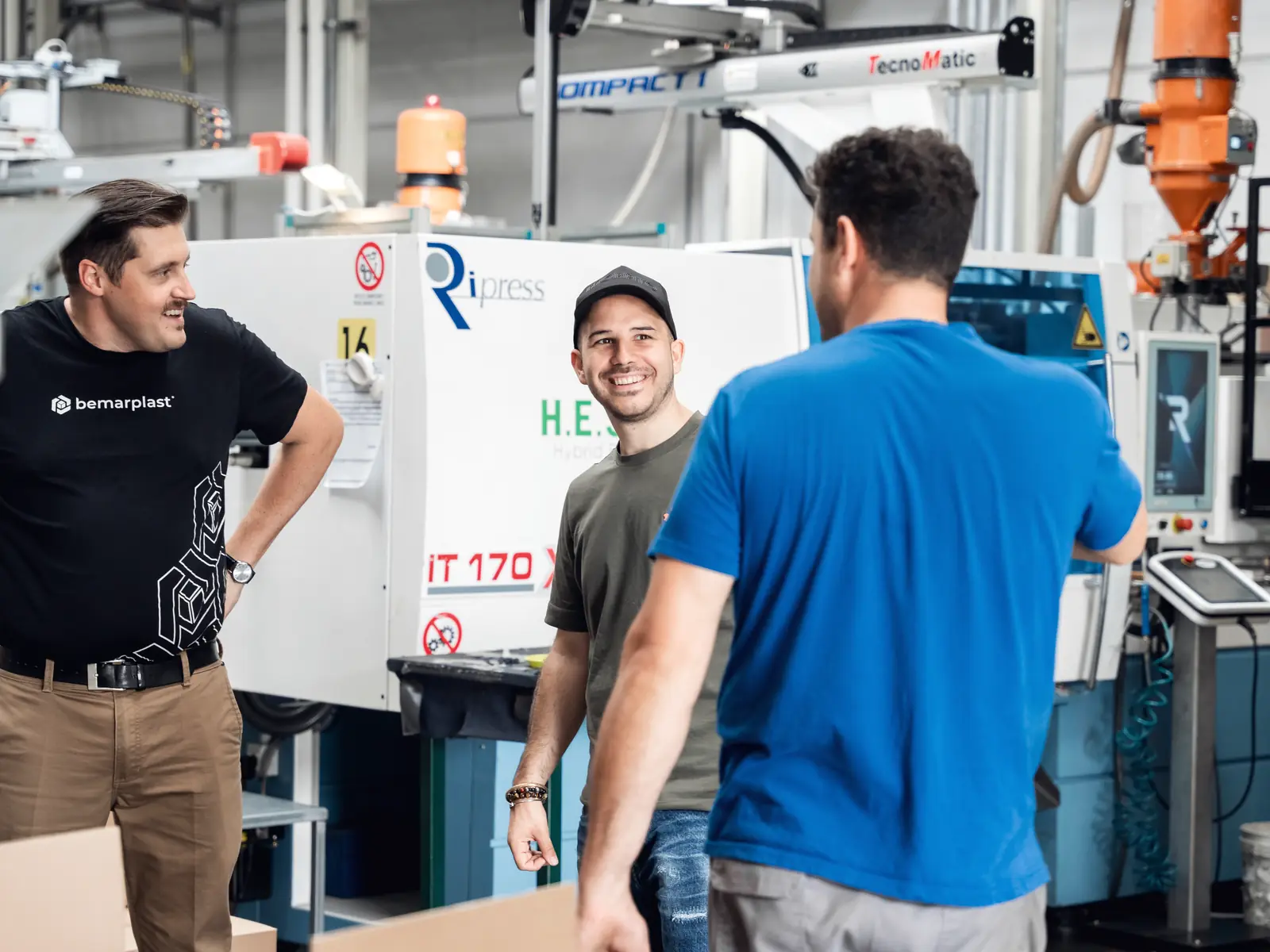
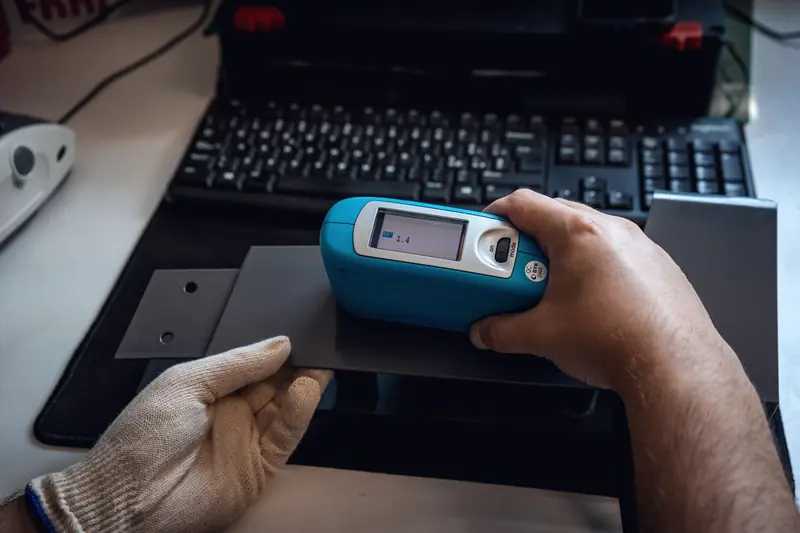
Quality you can measure
On cosmetic components, we check color with a spectrophotometer and a colorimeter.
Dimensions are measured by the KEYENCE IM-X1000 image measurement system: the part is placed on the stage, with no fixtures, and the values are compared with the drawing. The result is an OK/NG judgment with an inspection report.
- Quality system
- ISO 9001 since 2013, now ISO 9001:2015 (IMQ certificate No. 9190.BMRP)
- Valid
- until June 27, 2028
Industries we serve
Technical components for industries with precise requirements for material, tolerances and appearance. Choose your industry to see its typical requirements and frequently asked questions.
Industry pages
- AutomotiveTechnical and cosmetic components in engineering polymers, sample approval documentation, two-shot molding and overmolding.
- ElectronicsComponents, enclosures and parts: UL 94 flammability assessed on the material, overmolded inserts, ultrasonic welding.
- RailTechnical components with the material assessed against EN 45545-2, parts up to 1.8 kg, molds stored on request.
- MedicalComponents for non-implantable medical applications, in a controlled industrial environment, not a cleanroom.
- ConstructionTechnical components for construction and building systems: UV resistance, drinking water contact and electrical parts assessed on the material grade.
Frequently asked questions about the industries we serve
Answers to the questions buyers and engineering teams ask us most often.
Which industries does Bemar Plast serve?
Bemar Plast is a contract injection molder of technical components for five core industries: automotive, electronics, rail, non-implantable medical and construction. Each industry has its own page with typical requirements and frequently asked questions.
Do you work for the medical industry?
Yes, for components for non-implantable medical applications, produced in a controlled industrial environment. We do not have a cleanroom: for parts that require one, we are not the right supplier.
How do you handle industry standards such as UL 94 or EN 45545-2?
We assess them on the material grade, together with your engineering team, before quoting. A material's compliance with these standards is documented by the resin manufacturer or by test reports; our own quality management system is certified to ISO 9001:2015.
What certification does your quality system hold?
Our quality management system is certified to ISO 9001:2015 by IMQ, certificate No. 9190.BMRP, for the injection molding of thermoplastic materials and technical articles. We have been ISO 9001 certified since 2013; the current certificate is valid until June 27, 2028.
Which materials do you mold?
We mainly mold engineering polymers, such as PA6 and PA66 (including glass-filled grades), POM, PBT, PC, PC/ABS and PPA, and commodity polymers such as PP, ABS, PS, PMMA and TPE. We do not normally mold high-performance specialty polymers.
What quantities do you handle?
We handle quantities from 1,000 parts, the minimum batch we recommend, up to 1 million parts a year per part number, on 13 presses from 10 to 480 t. For just a few units we offer 3D-printed prototypes.
Where are the molds built?
New molds are designed by us and built by partners in Italy or China, your choice, to our technical specification. If you already own the mold, we put it straight into production.
Where do you manufacture?
All injection molding takes place in our own plant in San Giovanni Ilarione, in the province of Verona, Italy, and 3D-printed prototypes are also made in Italy. Customers in the European Union have no customs formalities; for the UK, Switzerland, the US and Canada, standard export customs procedures apply.
Which languages can we communicate in?
Italian, English, German, French and Spanish. Our technical staff work in Italian and English; our sales team supports customers in all five languages.
What do you need to prepare a quote?
To prepare a quote we need the 2D drawing or 3D model (STEP, IGES or PDF), the material or the part's operating conditions, approximate annual quantities and the requirements of your industry. If some data is missing, we define it together.
Send us your drawing, and we will tell you how to mold it
We reply with a technical assessment and a quote. To prepare them, we need three pieces of information about your component.
-
The part
The 2D drawing or 3D model of the component.
- STEP
- IGES
-
Material and annual volume
The required material, or the part's operating conditions if the material has yet to be chosen. Then the approximate annual volume.
-
Cosmetic requirements and tolerances
Visible surfaces, color and finish, and the critical tolerances to be met.
If you do not have all the data yet, write to us anyway: we will define it together.
- Phone
- +39 045 6550855
- info@bemarplast.com
- Hours
- Monday–Friday, 8 a.m.–6 p.m. Italian time (2 a.m.–noon ET)
Page maintained by the Bemar Plast Team. Last updated: November 17, 2026.