

Injection mold design and manufacturing
Bemar Plast, a contract injection molder in San Giovanni Ilarione near Verona, Italy, since 1995, provides injection mold design and manufacturing for plastic parts. We design the mold together with your engineering team and have it built by partner toolmakers in Italy or China, your choice, to our technical specification. Design approval, tryout, maintenance and molding stay with us: one point of contact from part to production.
At a glance
- In business
- since 1995
- Design
- in-house, co-designed with your engineering team
- Build
- partner toolmakers in Italy or China, your choice
- Dual quote
- Italy and Asia on the same design, on request
- Specification
- HASCO, DME, Meusburger, Pedrotti components; EUROMAP ejector layout
- Ownership
- the mold always belongs to you
- After delivery
- tryout, maintenance in our in-house workshop, storage on request
- Molding
- in Italy, on 13 presses from 10 to 480 t (≈ 530 US tons)
- Languages
- Italian, English, German, French, Spanish
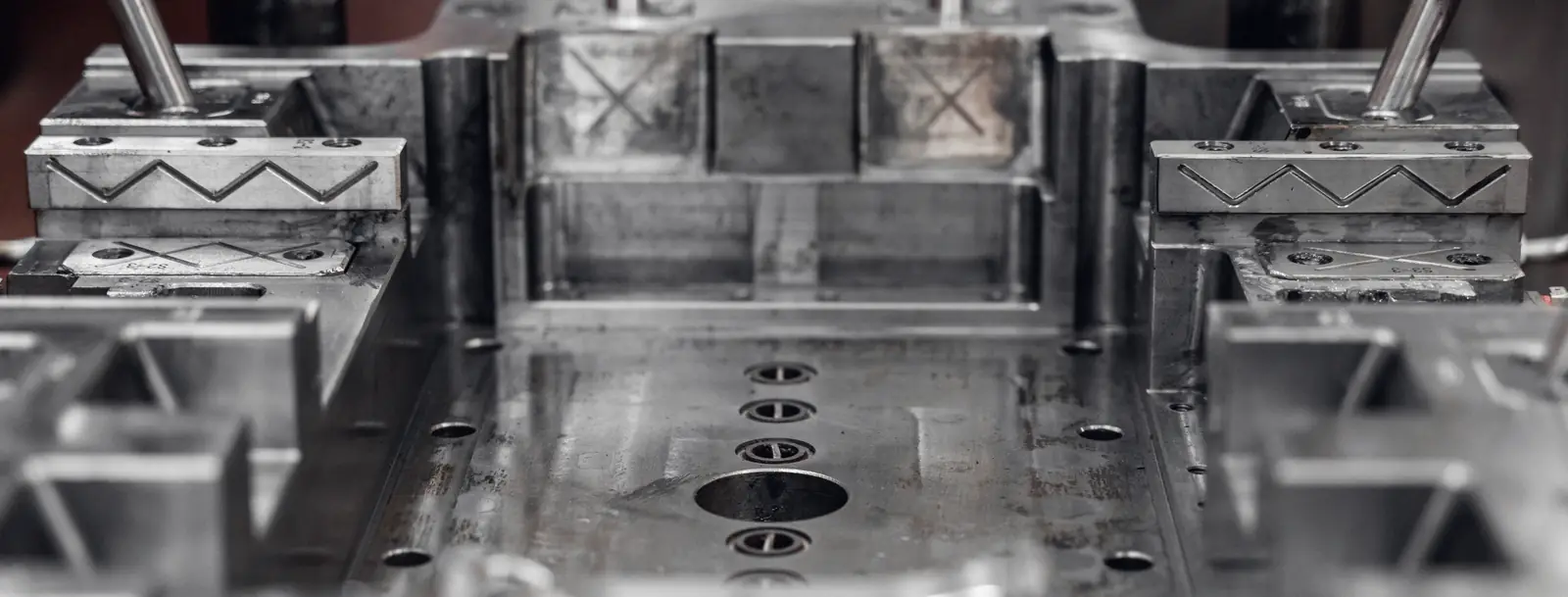
- Since 1995
- Molds designed in-house
- Built in Italy or China
- Bemar Plast mold specification
- Molded in Italy, ISO 9001
Why an Italian supplier
We mold every part in our own plant near Verona, Italy. For European companies, that means a short, transparent supply chain with a single point of contact.
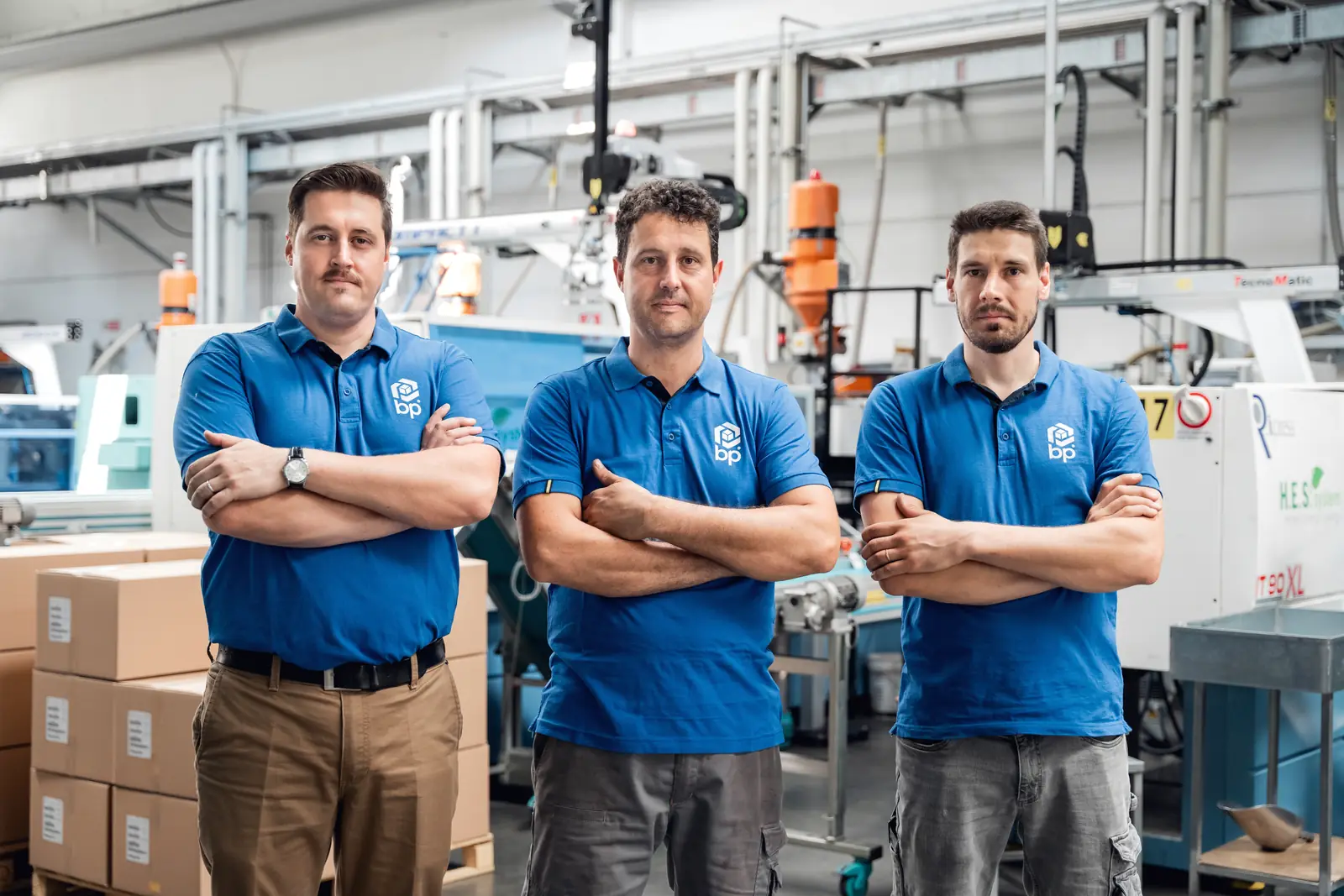
Every part molded in Italy
We mold every part in our plant in San Giovanni Ilarione, under an ISO 9001:2015 certified quality system, with documented dimensional inspection. 3D-printed prototypes are made in Italy too.
A European supply chain
For customers in the European Union: no customs formalities, Central European Time (CET), single-market rules. Customers outside the EU (UK, Switzerland, US, Canada): standard export customs procedures apply.
Molds built in Italy or China, your choice
On request we prepare a dual quote, Italy and Asia, so you can compare cost and lead time. Every mold is designed by us and built by qualified partner toolmakers to our technical specification; design approval, tryout and maintenance stay with us.
One technical point of contact
You talk directly to the people who design your mold and mold your part, from feasibility to finished component.
When we are the right partner
We are a good fit if
- you have a technical component to bring into production and need a new mold
- you want to compare building the mold in Italy and in China before you decide
- you want one point of contact for mold design, molding and secondary operations
- you plan ongoing production, from 1,000 parts up to 1 million a year per part number
- you already own a mold and want to transfer it from another supplier
We are not the right choice if
- you need only a few units: in that case we suggest 3D printing
- the component has to be produced in a cleanroom
- the decision rests on the lowest mold price alone
From part to proven mold: how we work
Many molding problems surface only once the mold has been built. That is why we start from the part, decide with you where the mold is built, and prove it out before series production.
Inquiry and feasibility
You send us the 3D model or 2D drawing, the material, annual volumes and your cosmetic and tolerance requirements. We reply with a technical assessment.
Part co-design
With your engineering team we review wall thickness, draft angles, undercuts and gate locations. Mold filling simulations, run by specialist partners, check the part before steel is cut.
Mold design and quote
We define the cavities, hot or cold runner feed, cooling and ejection. You choose where the mold is built, Italy or China; on request we prepare a dual quote.
3D design approval
Before the build starts, we formally approve the 3D mold design, in STEP or IGES format, with a documented review.
Build and tryout
The toolmaker builds the mold to our specification. We run the tryout ourselves: the first parts are measured and supplied with an inspection report, for your approval before series production.
Production and maintenance
The mold runs in our molding plant in Italy; we handle routine maintenance in our in-house workshop.
Mold built in Italy or China?
There is no single right answer for every project. The design and the specification stay the same; what changes is the toolmaker, the location and the logistics. That is why, on request, we prepare a dual quote for the same mold.
| Criterion | Built in Italy | Built in China |
|---|---|---|
| Design and specification | designed by us, to the Bemar Plast specification | the same design and the same specification |
| Mold cost | usually higher: compare it in the dual quote | usually lower: often the reason for choosing it |
| Lead time and shipping | road transport to our plant | add shipping of the mold to Italy, with the related customs procedures |
| Communication and checks | same time zone as our plant, easier visits to the toolmaker | distance and a different time zone: we handle coordination with the toolmaker |
| After delivery | tryout, maintenance and storage with us | tryout, maintenance and storage with us |
| When it makes sense | tight timelines, complex molds to follow closely, many intermediate checks | a fixed tooling budget, a stable design, a timeline with room for shipping |
Not sure which to choose? Ask us for a dual quote on tooling in Italy or China: the same design, two quotes side by side. Request a quote
What our mold specification covers
Whether the mold is built in Italy or China, the toolmaker works to the Bemar Plast technical specification. These are some of its main points.
Design approved before steel is cut
We formally approve the 3D mold design, in STEP or IGES, before the build, with a documented review.
European standard components
HASCO, DME, Meusburger and Pedrotti standard components, EUROMAP ejector layout and metric fasteners.
Steel chosen for the polymer
Certified steels selected for the material being molded, for example 1.2343 ESR/ESU (comparable to AISI H11) for filled polymers and 1.2083 ESR/ESU (comparable to AISI 420) for corrosive ones.
Pressure-tested cooling
Cooling circuits are pressure-tested at 10 bar (≈ 145 psi) for 1 hour. On molds designed for more than 50,000 cycles, the ejector plate runs on guide pillars with recirculating ball bushings.
PPAP validation
Our specification provides for PPAP validation on projects that require it.
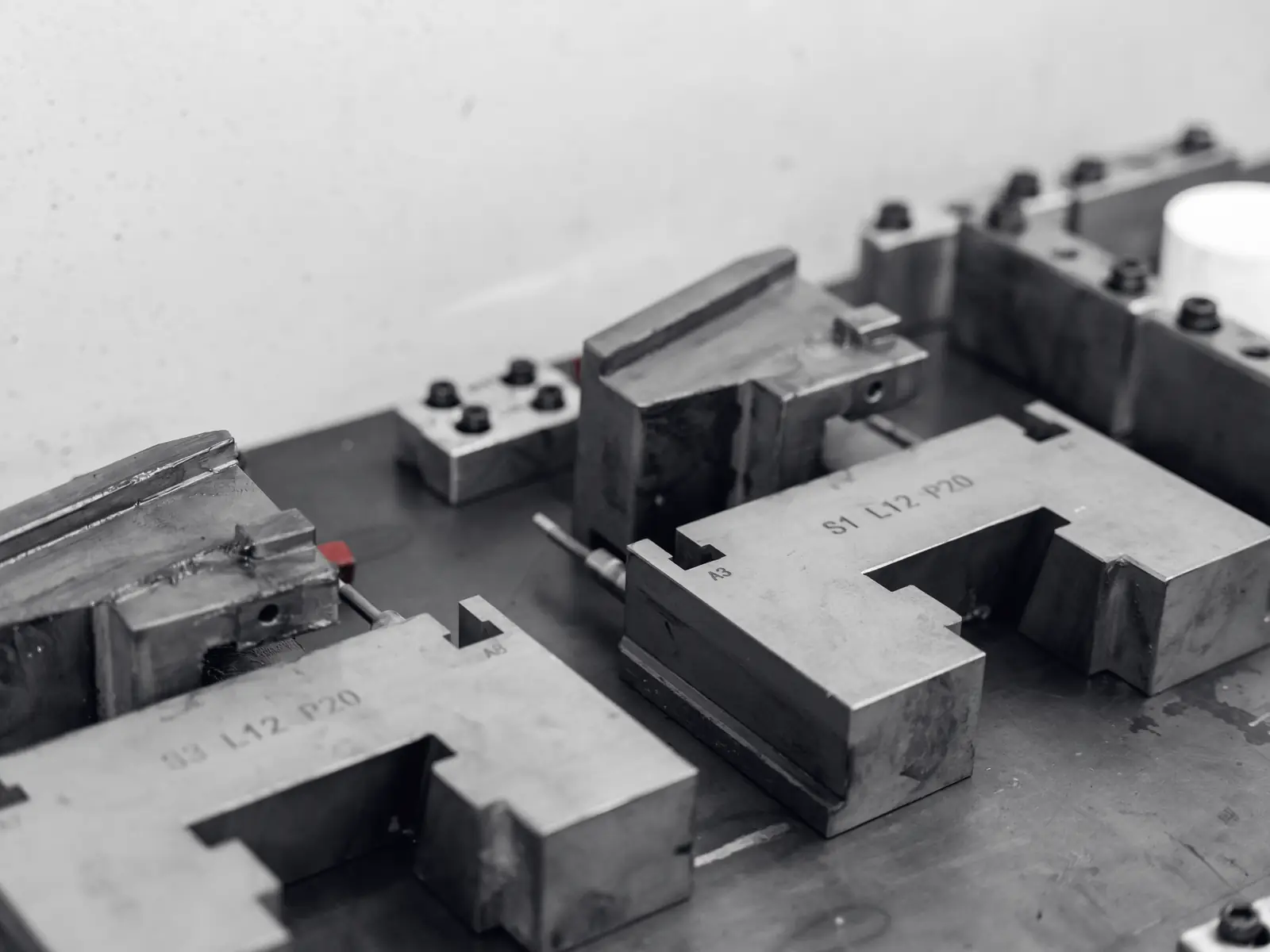
The molds we design
Every mold we design starts from the part and from the press it will run on. Together we choose the tooling that fits the geometry, material and volumes.
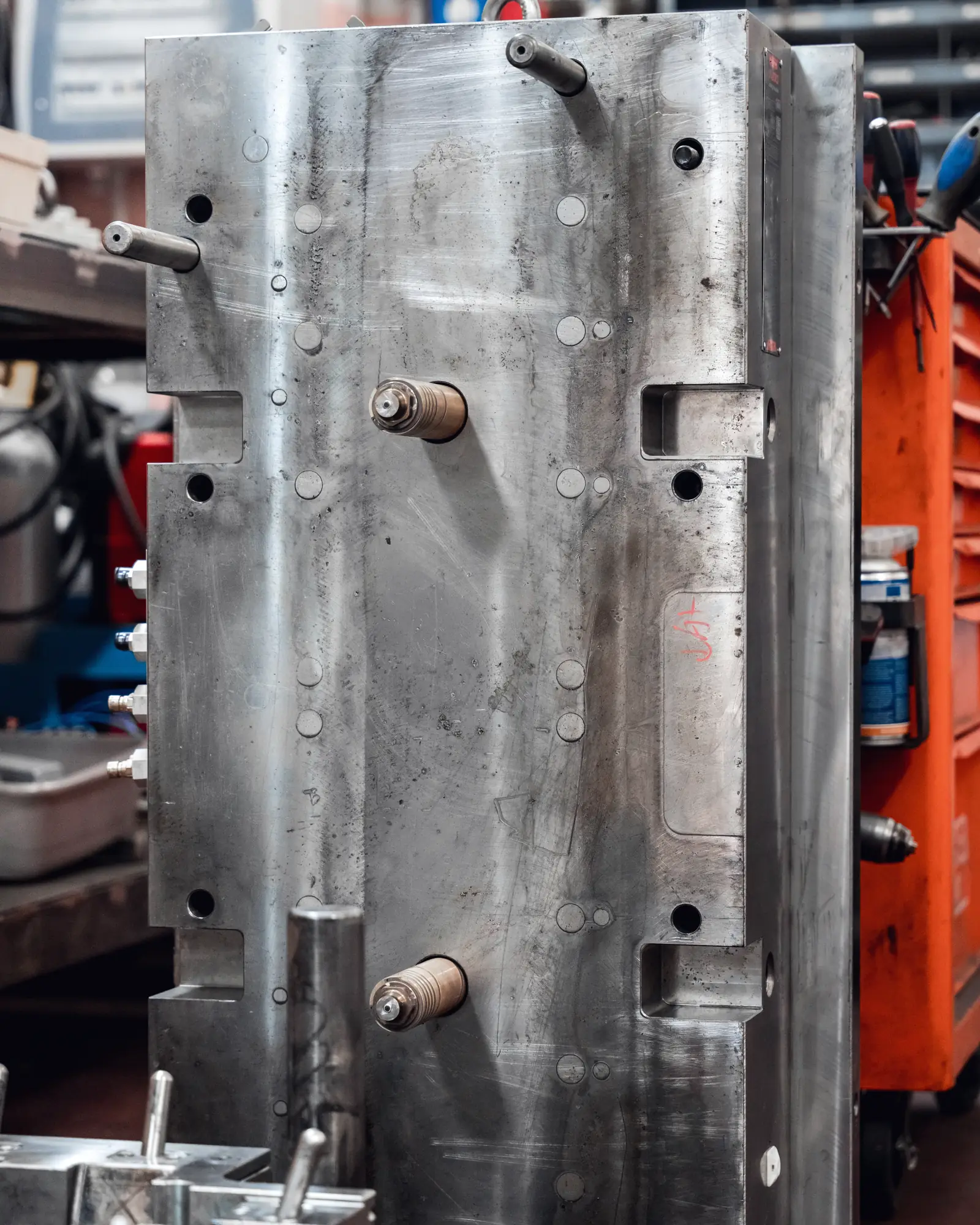
Mold design for injection molding
From part co-design to the mold design: cavities, feed system, cooling and ejection, engineered for real production in our plant, on presses from 10 to 480 t.
Multi-cavity molds
Several cavities in one mold when volumes justify it: we set the cavity count with you, based on annual volumes and cost per part.
Hot runner or cold runner
We design hot runner or cold runner molds depending on the part, material and volumes, weighing mold cost, scrap and cycle time with you.
Two-shot molds
For our two presses with a rotary table and second injection unit: two materials or two colors in one cycle, with no subsequent assembly.
Overmolding and insert molds
With seats for metal inserts or previously molded components, encapsulated in the part during molding.
The documentation supplied with the mold
Every mold is delivered with complete documentation, useful for maintenance and for managing spare parts over time.
3D design
The complete 3D model of the mold.
Steel and heat treatment certificates
Traceability of the steels used for cavities and cores, and of their heat treatments.
Spare parts bill of materials
The list of components to keep in stock or reorder.
Data sheets and manual
The technical data sheets and the mold manual.
EDM electrodes
The electrodes used for EDM, useful for future modifications or repairs.
Parameter sheet
The sheet with the reference process parameters for the mold.
After delivery: tryout, storage, maintenance
The mold comes to our plant and we look after it throughout its production life. It always remains your property.
Tryout in our plant
We try out the mold on the press and measure the first parts: series production starts only after your approval.
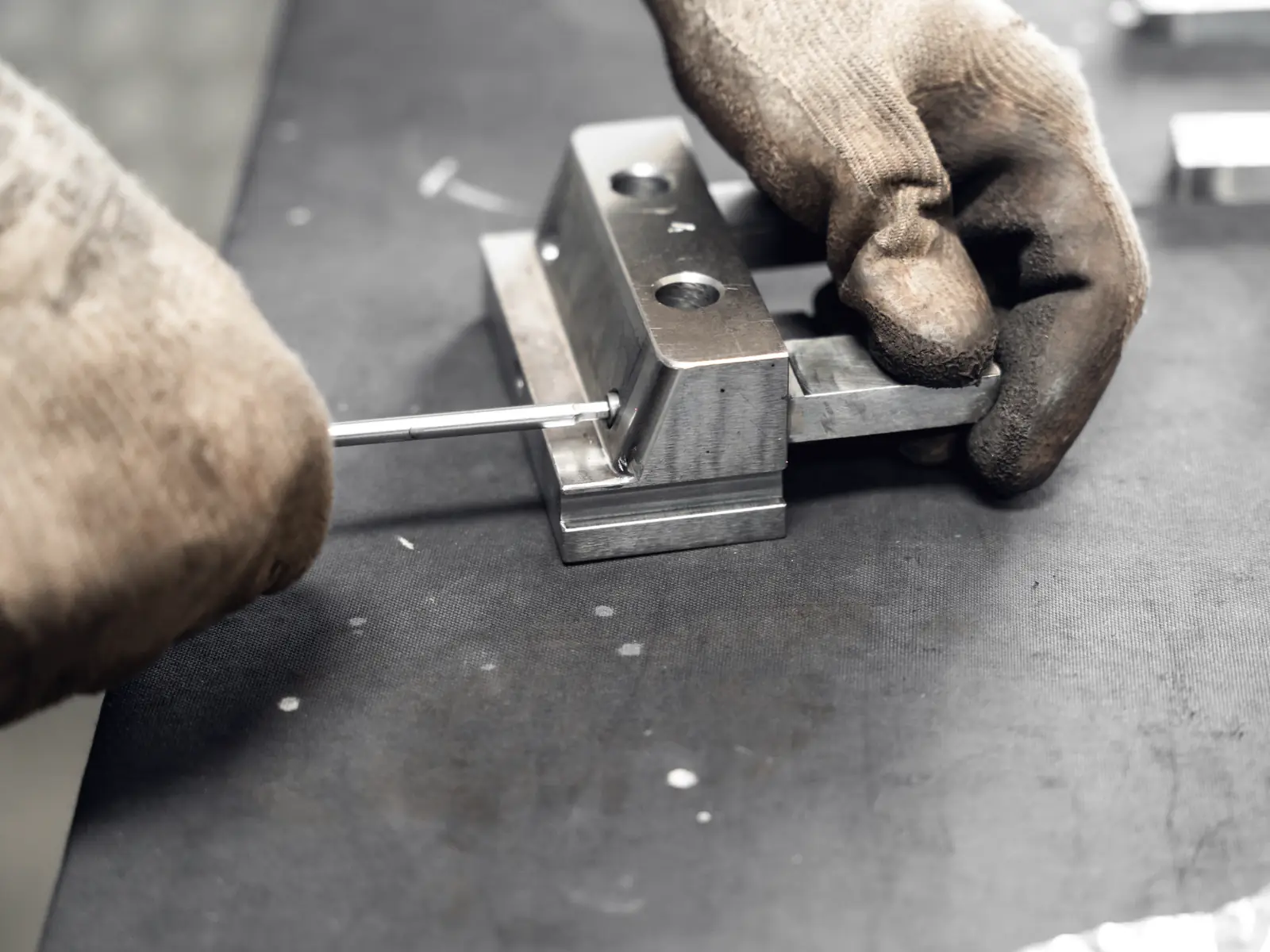
Routine maintenance in our in-house workshop
Our technicians work on the mold on site, with no need to ship it elsewhere.
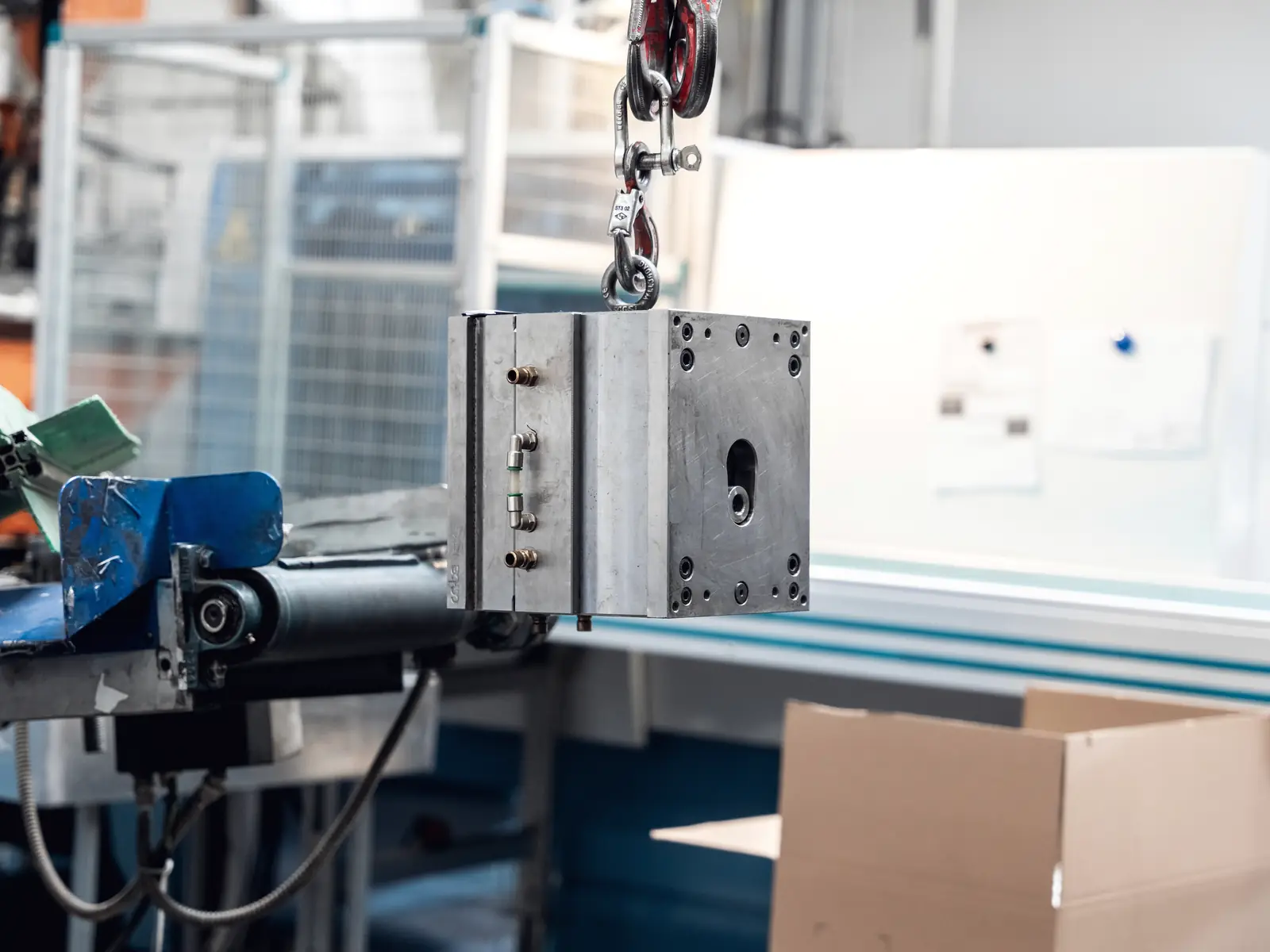
Storage in our mold warehouse
On request, between production runs, the mold is stored in our warehouse and treated with specific protective products to extend its service life.
Customer ownership
The mold is always yours, even while we store it.
Already have a mold?
Molding with customer-owned molds is the core of our business.
Transfer from another supplier
Bring us the mold that runs at another supplier today: we assess it and put it into production on the right press.
A mold you have had built
You deliver it to us and we take care of molding and secondary operations.
Quality you can measure
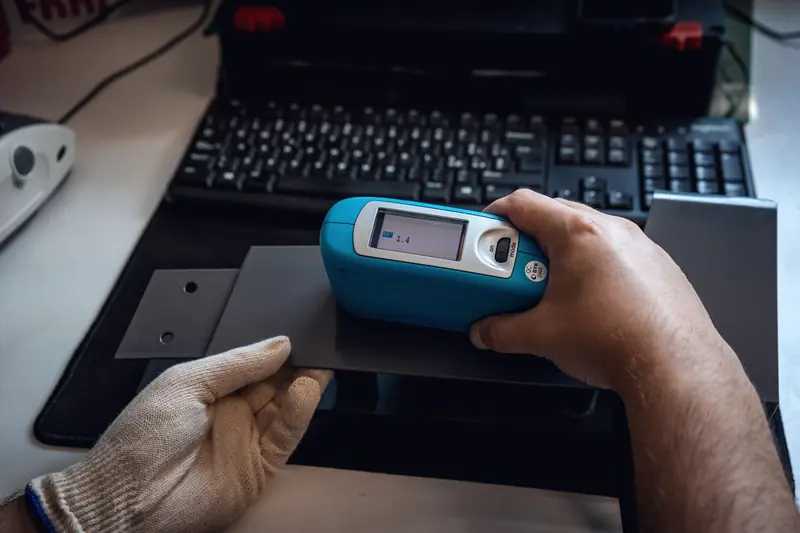
On cosmetic components, we check color with a spectrophotometer and a colorimeter.
Dimensions are measured by the KEYENCE IM-X1000 image measurement system: the part is placed on the stage, with no fixtures, and the values are compared with the drawing. The result is an OK/NG judgment with an inspection report.
- Quality system
- ISO 9001 since 2013, now ISO 9001:2015 (IMQ certificate No. 9190.BMRP)
- Valid
- until June 27, 2028
Have a 3D model or a drawing? Send it to us: we will tell you how we would design the mold and, if you wish, prepare a dual quote for Italy and Asia.
Request a quoteFrom prototype to series production, with one point of contact
Frequently asked questions
Answers to the questions buyers and engineering teams ask us most often about injection mold (or mould) tooling.
Does Bemar Plast offer injection mold design and manufacturing?
Yes. Bemar Plast provides injection mold design and manufacturing: our engineering team designs the mold in-house together with yours, starting from part co-design. The build is entrusted to partner toolmakers in Italy or China, your choice, and molding takes place in our plant near Verona, Italy.
Are you a plastic injection mold maker?
No, we do not build molds in our own plant: we design them in-house and have them built by partner toolmakers in Italy or China, your choice, to our technical specification. Design approval, tryout, routine maintenance in our in-house workshop and molding stay with us, so you deal with one point of contact instead of a separate mold maker and molder.
Where are the molds built?
In Italy or China, your choice. The mold is built by a partner toolmaker to our technical specification; design approval, tryout and maintenance stay with us in both cases.
What is the Italy-Asia dual quote?
It is two quotes for the same mold: one from a toolmaker in Italy and one from a toolmaker in China, on the same design and to the same specification. It lets you compare cost and lead time and decide on hard data. We prepare it on request.
How much control do you have over a mold built in China?
The same checks as for a mold built in Italy: the design is ours and the toolmaker works to our specification. Before the build we formally approve the 3D design; the mold uses European standard components and pressure-tested cooling circuits, and we run the tryout on the press in our plant in Italy. What changes is the distance and the time zone: we handle coordination with the toolmaker.
Who owns the mold?
The mold always belongs to the customer, even when we design it and store it in our mold warehouse.
How much does an injection mold cost?
The cost of an injection mold depends mainly on size, number of cavities, part complexity, steel, feed system and where it is built. There is no standard price: with the 3D model, material and annual volumes we prepare a quote, including a dual Italy-Asia quote. The higher the volumes, the more the investment is spread across each part.
How long does it take to build an injection mold?
Lead time depends on the complexity of the mold and on the toolmaker chosen, so we state it in the quote for each project. In the dual quote, lead time is one of the comparison criteria; for a mold built in China, shipping to our plant must also be factored in.
Do you run mold filling simulations before the mold is built?
Yes, through specialist external partners. Simulations help choose gate locations and predict filling defects and warpage before steel is cut, when changes cost less.
Which components and steels does your specification call for?
Our specification calls for European standard components from HASCO, DME, Meusburger and Pedrotti, EUROMAP ejector layout and metric fasteners. Steels are certified and chosen for the polymer, for example 1.2343 ESR/ESU (comparable to AISI H11) for filled materials and 1.2083 ESR/ESU (comparable to AISI 420) for corrosive ones.
What documentation comes with the mold?
The mold is delivered with complete documentation: 3D design, steel and heat treatment certificates, spare parts bill of materials, technical data sheets, manual, EDM electrodes and parameter sheet.
Who maintains the mold?
We carry out routine maintenance ourselves, in our in-house workshop. Between production runs the mold can stay in our mold warehouse, treated with specific protective products.
Can I transfer a mold I already own to you?
Yes. Molding with customer-owned molds is the core of our business: you can transfer a mold that currently runs at another supplier, or have one built yourself and deliver it to us. We assess it and put it into production on the right press.
Do you design two-shot and overmolding molds?
Yes. We design two-shot molds for our two rotary-table presses, to combine two materials or two colors in one cycle, and molds for overmolding metal inserts or previously molded components.
Hot runner or cold runner: which is better?
It depends on the part: we design hot runner or cold runner molds based on material, geometry, volumes and cosmetic requirements. In general, a hot runner reduces scrap and runners but costs more and is more complex to maintain; a cold runner is simpler and cheaper to build. We recover sprues and runners with beside-the-press granulators on all 13 lines.
Do you sign NDAs on projects?
Yes, whenever the customer requests one. Our legal team reviews each agreement before signing.
What do you need to quote a mold?
To quote a mold we need the 3D part model (STEP or IGES) or 2D drawing, the material, approximate annual volumes, and cosmetic and tolerance requirements. If some data is missing, we define it together during co-design.
Send us your drawing, and we will tell you how to mold it
We reply with a technical assessment and a quote. To prepare them, we need three pieces of information about your component.
-
The part
The 2D drawing or 3D model of the component.
- STEP
- IGES
-
Material and annual volume
The required material, or the part's operating conditions if the material has yet to be chosen. Then the approximate annual volume.
-
Cosmetic requirements and tolerances
Visible surfaces, color and finish, and the critical tolerances to be met.
If you do not have all the data yet, write to us anyway: we will define it together.
- Phone
- +39 045 6550855
- info@bemarplast.com
- Hours
- Monday–Friday, 8 a.m.–6 p.m. Italian time (2 a.m.–noon ET)
Page maintained by the Bemar Plast Team. Last updated: November 17, 2026.