

Polypropylene (PP) is a semi-crystalline thermoplastic from the polyolefin family and one of the most widely used plastics in the world, valued for its low weight, chemical resistance and low cost. In injection molding it is used for technical components, closures with living hinges, appliance parts and automotive components. This guide covers PP grades, strengths and limitations, additives and fillers, molding guidelines and typical applications.
History of polypropylene
Isotactic polypropylene, the form used industrially, was first obtained in 1954 by the research group of Italian chemical engineer Giulio Natta, working with the Italian chemical company Montecatini. Industrial production started in 1957 at the Montecatini plant in Ferrara, Italy, under the trade name Moplen, and the material spread quickly. In 1963 Natta shared the Nobel Prize in Chemistry with Karl Ziegler for their work on polymers. PP remains one of the most widely used plastics, both in everyday products and in technical parts.

Types of polypropylene
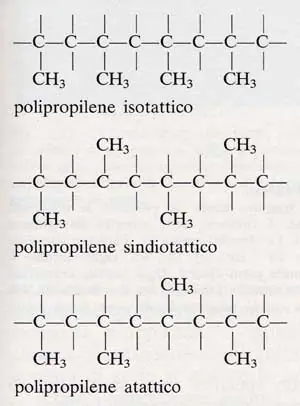
Polypropylene is a semi-crystalline thermoplastic in the polyolefin family. It is made by polymerization of propylene: it leaves the reactor as a colorless, odorless and very light powder and is sold as pellets, usually with additives already compounded in. Depending on how the methyl groups (CH3) are arranged along the chain, PP can be:
- isotactic (iPP): all methyl groups on the same side of the chain; this crystalline form is used in almost all applications
- syndiotactic (sPP): methyl groups alternate; lower crystallinity and limited use
- atactic (aPP): random arrangement, giving an amorphous, rubber-like material; of little interest for molding, it is used mainly in adhesives and modified bitumen roofing membranes.
Isotactic PP is the commercially relevant form. Its density is about 0.90 g/cm³, among the lowest of all thermoplastics, and it melts at around 160-165 °C (320-330 °F). It offers a good balance of physical, chemical and mechanical properties.
By chemical composition, polypropylene grades fall into three groups:
- Homopolymer (PP-H): propylene units only. Good cost/performance ratio and high stiffness, but brittle at low temperatures
- Impact copolymer (PP-B, also called block or heterophasic copolymer): propylene with an ethylene-based rubber phase; tougher, including in the cold, and more flexible than the homopolymer, with lower stiffness
- Random copolymer (PP-R): small amounts of ethylene randomly distributed along the chain; better clarity, especially in thin walls, and higher impact strength than the homopolymer.
More recent developments, including nucleating and clarifying agents, have produced stiffer and clearer grades. In some applications polypropylene can therefore replace more expensive materials such as ABS, PS, PET, PC and TPE.
Polypropylene properties: advantages
- Mechanically recyclable; identified by resin identification code 5
- Very versatile, available in many formulations with different properties
- One of the lowest-cost plastics
- Easy to process and machine
- Wide range of end products
- Low density: lighter than most other polymers
- Excellent chemical resistance (non-polar material): resists many polar organic solvents, aqueous solutions of inorganic salts, non-oxidizing acids and bases, alcohols, aldehydes, ketones, esters and many oils
- Negligible water absorption: not hygroscopic
- Good electrical insulator, but builds up static charge (and attracts dust) unless antistatic additives are used
- Good heat resistance for a commodity polymer: continuous service temperature is roughly 80-100 °C (175-210 °F) for unfilled grades and higher for filled or reinforced grades; it depends on grade and load, so check the datasheet
- Higher service temperature than polyethylene
- Good clarity in random copolymers and clarified grades
- Easy to color in the mass
- Low water vapor permeability; the barrier to oxygen and carbon dioxide, however, is modest
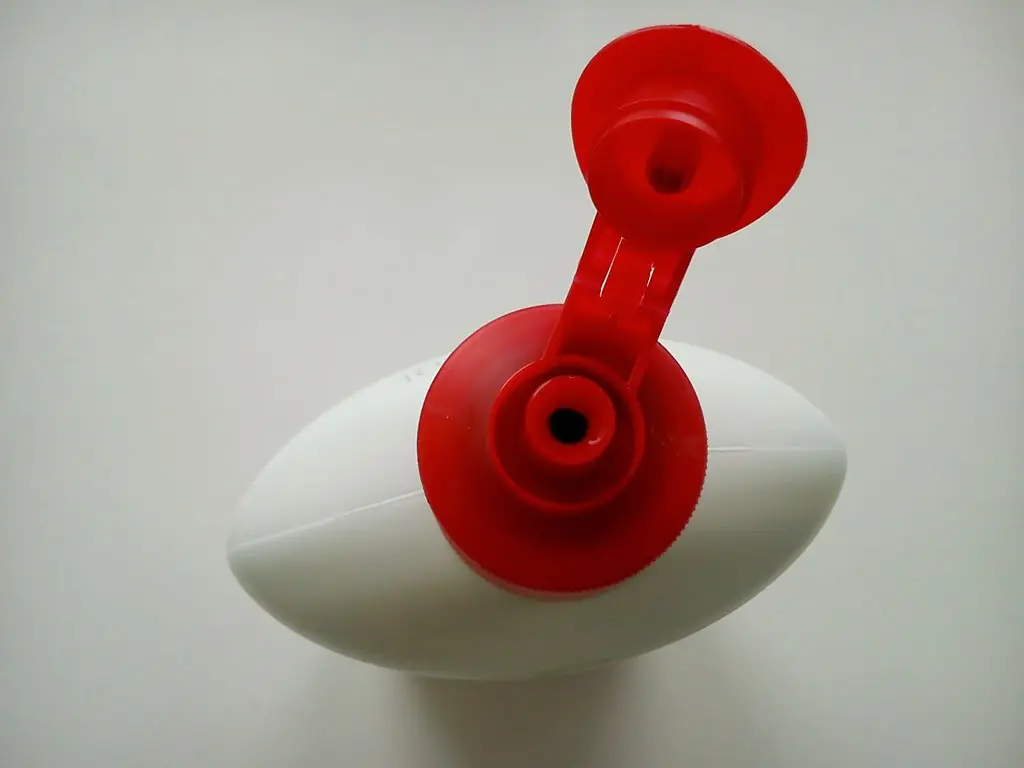
- Good fatigue resistance under repeated flexing: this is what makes integral living hinges possible, for example in flip-top closures
- Long service life when properly stabilized
- Good abrasion and wear resistance
- Steam sterilizable in an autoclave (suitable grades)
- Can be friction welded and hot plate welded
- Available in grades suitable for food contact and pharmaceutical applications.
Polypropylene properties: disadvantages
- Prone to oxidation: without antioxidants it degrades at high temperature in the presence of oxygen; poor resistance to oxidizing agents such as chlorosulfonic acid, oleum, concentrated nitric acid and halogens
- Not suited to contact with copper: at high temperature, copper and other metal impurities accelerate degradation unless metal deactivators are used
- Swells in contact with aliphatic, aromatic and halogenated hydrocarbons, such as gasoline and benzene
- Poor impact strength at low temperature, especially the homopolymer, which becomes brittle at around 0 °C (32 °F); impact copolymers perform better in the cold
- Hard to bond, paint, screen print and pad print because of its low surface energy: surface pretreatment (flame, corona or plasma) or a primer is needed
- Poor scratch resistance
- Poor UV resistance: without suitable stabilization (UV absorbers, hindered amine light stabilizers or HALS, or blends of both) it yellows, loses gloss, chalks and cracks on the surface, and its mechanical properties drop
- Not suitable for outdoor use unless UV-stabilized
- High mold shrinkage compared with amorphous polymers.
Processing methods
PP can be processed by:
- additive manufacturing (3D printing)
- extrusion
- fiber spinning
- blow molding
- injection molding and rotational molding
- thermoforming.
Injection molding polypropylene
PP is one of the most common injection molding materials: it flows well, fills thin walls and allows short cycle times. The main points for part design and production are:
- Drying: PP is not hygroscopic and normally does not need drying. Some filled grades may need it if the pellets have picked up surface moisture; follow the datasheet.
- Shrinkage and warpage: like all semi-crystalline polymers, PP has high shrinkage, which becomes anisotropic with glass fibers. Uniform wall thickness, correctly sized ribs and balanced mold temperature control reduce sink marks and warpage.
- Living hinges: place the gate so that the melt flows across the hinge, perpendicular to its axis, so the molecular chains are oriented in the bending direction.
- Finishing and marking: painting, pad printing or bonding require surface pretreatment; coloring in the mass with a masterbatch is often the better option.
- Overmolding: PP bonds to compatible TPE grades, for example SEBS-based compounds, for soft-touch grips and seals.
At Bemar Plast we mold PP parts as a contract manufacturer in our plant in San Giovanni Ilarione, near Verona, Italy, on 13 presses from 10 to 480 tons, including two-shot (2K) molding and overmolding. Presses, processes and secondary operations are described on our plastic injection molding service page.
Additives, fillers, colorants and reinforcements
PP can be modified to improve its properties or to add new ones. The usual tools are functional additives, fillers, colorants and reinforcements.
Impact modifiers
They increase toughness, ductility and impact strength, also at low temperature. In exchange, stiffness, tensile and flexural strength and heat resistance decrease.
Flame retardants
Flame retardants hinder and slow down combustion and help the part reach the required flammability rating. They include halogenated compounds, intumescent systems, melamine derivatives and magnesium hydroxide.
Mineral fillers
Mineral fillers in polypropylene compounds lower the cost of the compound, improve dimensional stability and make shrinkage more isotropic.
- Calcium carbonate: improves dimensional stability and surface quality and reduces impact strength less than other fillers. Suitable for cosmetic parts, but with little reinforcing effect.
- Talc: increases stiffness, dimensional stability, heat resistance and creep resistance. High aspect ratio (HAR) talc is widely used in the automotive industry because, at the same loading, it gives higher stiffness and tensile properties than standard talc: less filler is needed and parts get lighter.
- Wollastonite: improves scratch resistance, which is valued above all in automotive interiors. It reinforces more than standard talc but less than HAR talc and mica. Unlike talc and mica, it has poor resistance to acids and bases.
- Mica: muscovite (white or whitish) is the most common type, while phlogopite (darker) has higher thermal stability; in polymers both behave similarly. Mica reinforces more than other common mineral fillers, offers good electrical and sound-damping properties and can help laser marking.
Reinforcements
Glass fibers improve the mechanical properties of polypropylene, in particular:
- tensile strength
- elastic modulus
- fatigue resistance under cyclic loads
- thermal properties (HDT and Vicat)
- creep resistance, meaning resistance to permanent deformation under constant load
- impact strength, especially with long fibers
- stiffness at elevated temperature.
They also affect other properties:
- they increase the density of the compound
- they reduce mold shrinkage but make it anisotropic, so warpage and distortion can occur and the part must be designed carefully
- they reduce melt flow.
Glass beads can be used alongside or instead of glass fibers: they reduce shrinkage more uniformly and limit warpage.
Colorants
Color conformity is often part of supply specifications and technical drawings. To avoid costly painting, choose suitable colorants and masterbatches early: they must be compatible with the polymer, stable at processing temperature and lightfast.
Applications
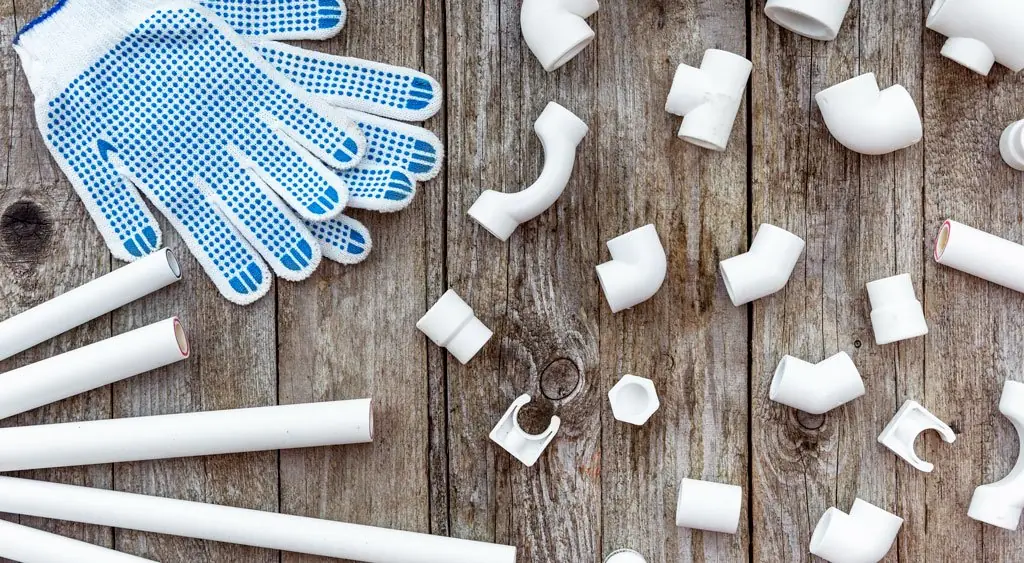
- Building and construction accessories
- Sterilizable medical equipment
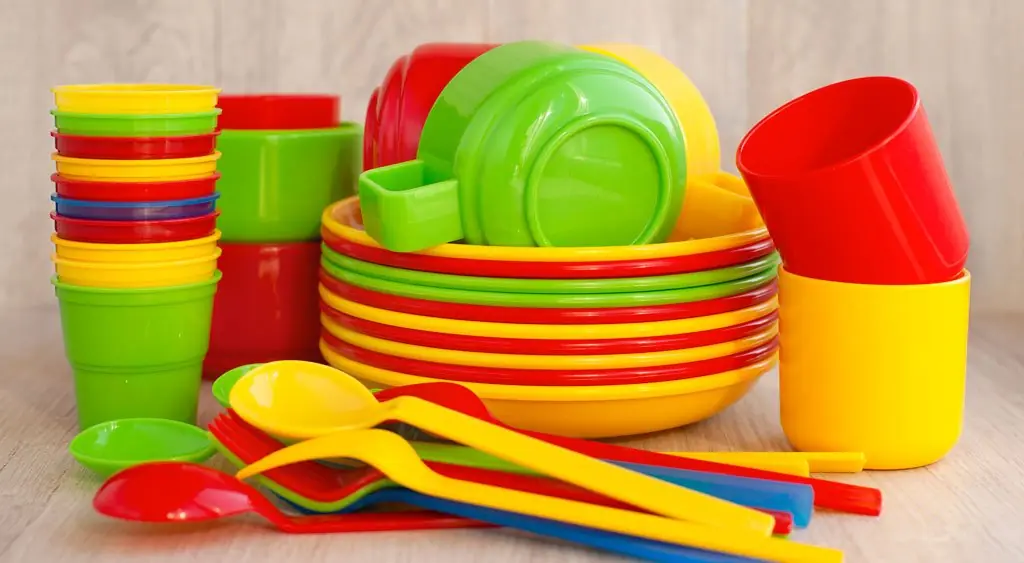
- Housewares
- Fume hoods and ducting fittings
- Housings for electrical equipment and pumps
- Automotive parts, for example battery cases, bumpers, splash guards, dashboards, interior trim, ventilation system components, headlamp and side marker housings
- Furniture components
- Containers with and without hinges
- Household appliances such as coffee machines, toasters, dishwashers, washing machines and fan heaters
- Filters
- Flanges
- Packaging and bottles
- Garden furniture
- Structural parts
- Tool holders
- Sound-absorbing panels
- Chairs
- Tanks
- Caps and closures
- Pipes
- Power tools
- Luggage.
Extra: a historical documentary on polypropylene
The vintage Italian documentary "Moplen. Polipropilene isotattico" shows how the new material was first presented. Many of the products of that time, from closures to housewares, are still made of PP today, with more advanced grades and processing technology.
Our technical team can help you choose the PP grade that fits your part and molding process. Start from our plastic injection molding service.
Frequently asked questions
Does polypropylene need drying before injection molding?
Normally no: PP is not hygroscopic and absorbs a negligible amount of water. Drying may be needed for some filled grades or when the pellets have picked up surface moisture, for example from condensation; always follow the resin supplier's datasheet.
What is the difference between PP homopolymer and copolymer?
PP homopolymer (PP-H) is stiffer and cheaper but brittle at low temperature. Impact (block) copolymer (PP-B) contains an ethylene-based rubber phase and performs better under impact in the cold, while random copolymer (PP-R) offers better clarity.
Is PP UV resistant and suitable for outdoor use?
Only when UV-stabilized: unmodified PP degrades in sunlight, yellows, chalks and loses mechanical properties. Outdoor parts call for grades with UV stabilizers (for example HALS) and suitable pigments.
Can PP be bonded, painted or pad printed?
Yes, but the surface must be pretreated first, because PP has low surface energy. Common methods are flame, corona or plasma treatment, or a primer; alternatively, parts are colored in the mass with a masterbatch.
When should another material replace PP?
When the part needs more stiffness, heat resistance or dimensional stability than filled PP can deliver, an engineering polymer such as polyamide (PA, nylon) or POM is usually evaluated. For cosmetic parts that will be painted, ABS is a common choice.
Does Bemar Plast mold PP parts?
Yes: PP is one of the materials we injection mold as a contract manufacturer in our plant in San Giovanni Ilarione, near Verona, Italy, on 13 presses from 10 to 480 tons, including two-shot (2K) molding. See our plastic injection molding service.