

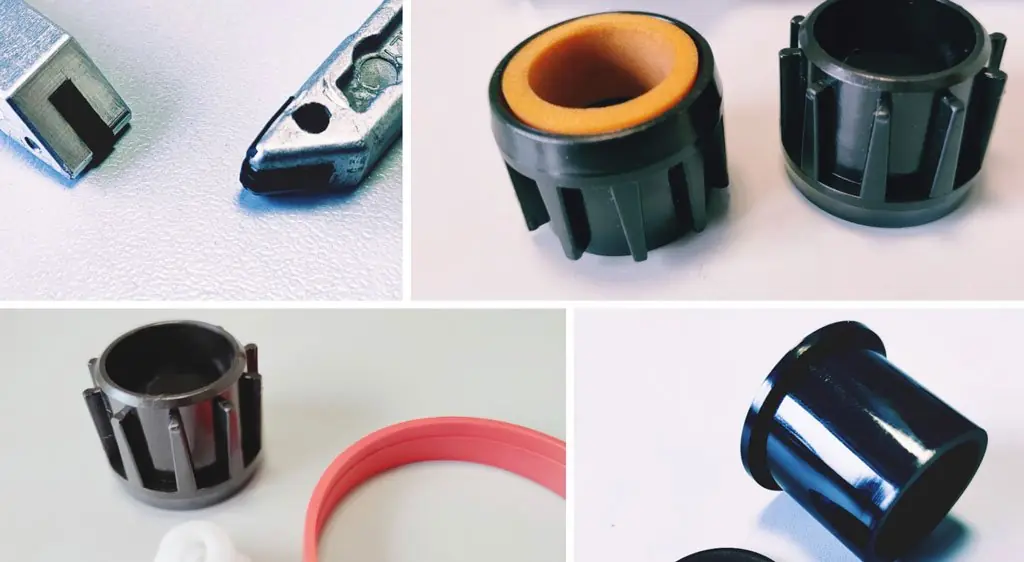
POM (polyoxymethylene), also known as acetal, is a semi-crystalline engineering thermoplastic that combines high stiffness, low friction, excellent wear resistance and good dimensional stability. It is used for precision mechanical parts such as gears, bushings, clips, guides and valve components, often as a replacement for metal. The most common way to process it is plastic injection molding.
Brief history
Polyoxymethylene was studied in the 1920s by the German chemist Hermann Staudinger, but at the time it could not be made thermally stable enough for practical use. DuPont brought the homopolymer to market, with industrial production starting in 1960; the copolymer followed shortly after, in 1962, from Celanese. Today POM is mainly used for technical components thanks to its mechanical and self-lubricating properties, and it is one of the most widely used engineering plastics in metal replacement.
POM properties: grades
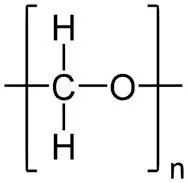
POM, also called acetal, polyacetal or polyformaldehyde, is a semi-crystalline thermoplastic with an opaque white color. It is produced by polymerizing formaldehyde.
Its melting point is around 165 °C for the copolymer and around 175 °C for the homopolymer.
POM homopolymer (POM-H) and POM copolymer (POM-C)
POM comes in two main families, depending on its chemical structure:
- POM homopolymer has higher crystallinity than the copolymer, which means higher stiffness and hardness and slightly higher mechanical strength, even unfilled
- POM copolymer offers better chemical resistance, for example to alkalis and hot water, and better thermal stability: it degrades less during processing and in long-term service at elevated temperature.
POM advantages
- Low water absorption; the copolymer also performs well in hot water
- Good colorability in opaque shades
- Good toughness
- Low coefficient of friction
- Moderate cost compared with other engineering plastics
- High surface hardness
- Excellent wear resistance
- High stiffness, even without fillers
- Good electrical insulation
- Good creep and fatigue resistance
- Good heat resistance: continuous service temperatures generally stay below 100 °C, depending on the grade
- Good low-temperature performance, down to about -40 °C
- High mechanical strength
- Excellent dimensional stability, also in humid environments
- Good resistance to oils, greases, fuels and many solvents
POM disadvantages
- Burns easily, with a barely visible flame, and is not self-extinguishing
- Cannot be joined by high-frequency (RF) welding
- Narrow processing window: above about 230 °C, or with long residence times in the barrel, it decomposes and releases formaldehyde gas
- Poor UV resistance unless stabilized
- Not resistant to strong acids or oxidizing agents, including chlorine; the homopolymer is also sensitive to alkaline solutions
- No transparent grades
- High mold shrinkage, which must be taken into account when designing the part and the mold
Some of these limits can be overcome with suitable additives, fillers and reinforcements. Common options for POM include glass fibers and glass beads, carbon fibers, carbon black, UV stabilizers, mineral fillers and lubricants such as PTFE to reduce friction even further.
Processing methods
- Injection molding
- Extrusion, for stock shapes such as sheet, rod and profiles
- Blow molding, with dedicated grades
- Machining of stock shapes
In injection molding, POM needs some care: a controlled melt temperature and short residence times to prevent decomposition; a well-vented mold, temperature-controlled at a relatively high temperature, for uniform crystallization and dimensionally stable parts; and high shrinkage, in the order of 2%, to be allowed for in the tool design. In our plant every line has its own dryer and mold temperature controller.
Applications
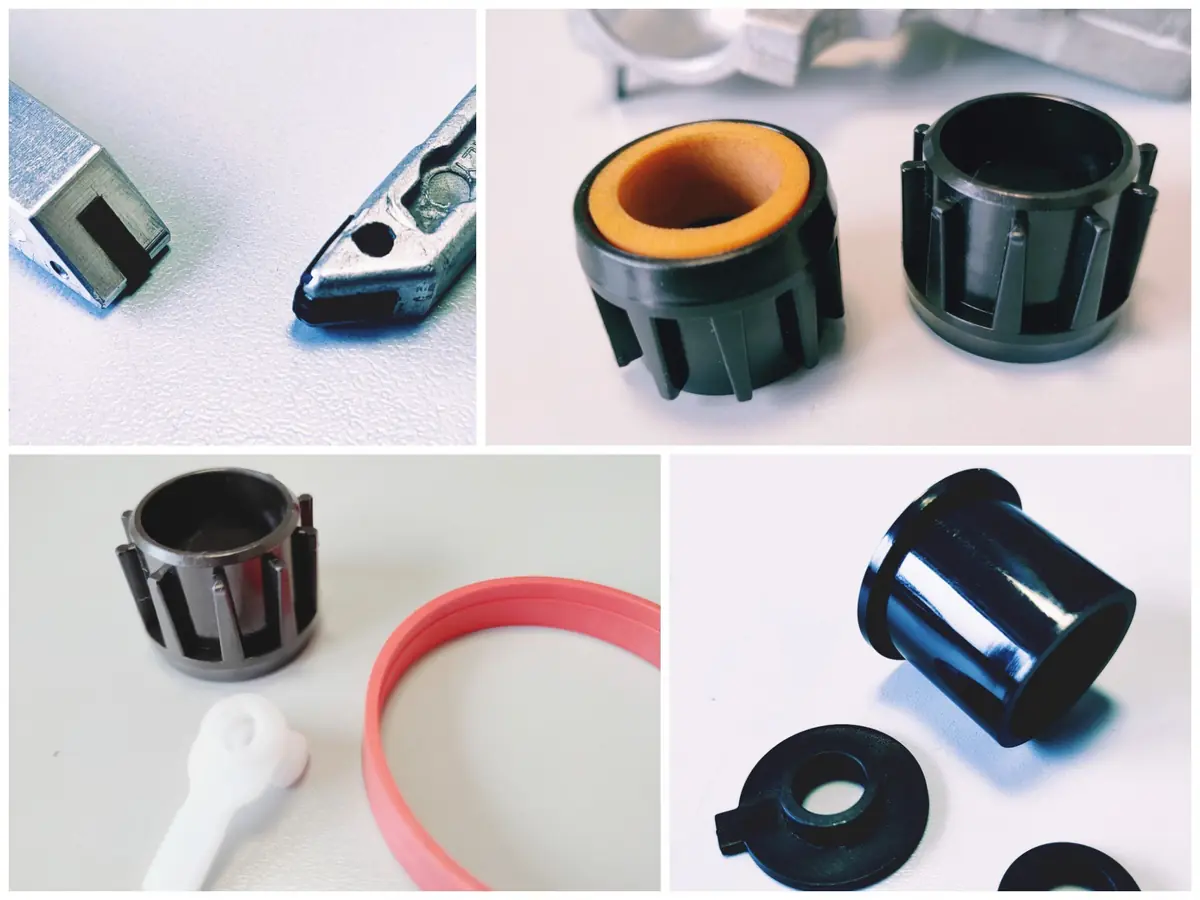
- Precision engineering: gears, springs, screws, bushings, sprockets, guides and pinions
- Plumbing and fluid handling: fittings, pump components, valves, shower heads, faucet parts and accessories
- Electronics: components for meters, telecom equipment and loudspeakers
- Automotive: seat belt parts, handle and steering components, fuel system components
- Medical: components for non-implantable medical applications, using dedicated grades
- Food industry: food-contact compliant grades are available
- Toys
- Building and construction: hinges, door and window handles, housings, control panel buttons
- Apparel: for example zippers and buckles
Conclusions
POM is a proven choice for technical components that need stiffness, low friction and dimensional accuracy. When higher service temperatures or more toughness are required, compare it with polyamide (PA, nylon); for less demanding, lower-cost parts, polypropylene (PP) may be enough.
Bemar Plast molds POM parts in its own plant in San Giovanni Ilarione, near Verona, Italy. Our engineering team helps you choose between homopolymer, copolymer and filled grades based on load, operating environment and cost. Learn more about our plastic injection molding service.
Frequently asked questions
What is POM?
POM (polyoxymethylene) is a semi-crystalline engineering thermoplastic, also called acetal or polyacetal. It is stiff, slippery and wear resistant, which is why it is used for gears, bushings, clips and other precision mechanical parts.
What is the difference between POM-H and POM-C?
POM homopolymer (POM-H) is more crystalline, so it is stiffer and slightly stronger. POM copolymer (POM-C) has better resistance to hot water, alkaline solutions and thermal degradation during processing.
Does POM need drying before molding?
Usually not, because POM absorbs very little moisture. Drying is recommended when the resin has been stored for a long time or in a humid environment, or when the supplier's datasheet calls for it; in our plant every molding line has its own dryer.
POM or nylon (PA) for gears?
POM is the better choice when you need dimensional stability in humid conditions and low friction, because it absorbs far less water than polyamide. PA, especially glass-filled, handles higher temperatures; the right choice depends on load, temperature and environment. See our polyamide guide.
Is POM chemically resistant?
POM resists oils, greases, fuels and many solvents well, but not strong acids or oxidizing agents, including chlorine. The homopolymer is also sensitive to alkaline solutions, which the copolymer tolerates better.
Does Bemar Plast mold POM parts?
Yes. POM is one of the engineering plastics we injection mold in our plant in San Giovanni Ilarione, near Verona, Italy, on 13 presses from 10 to 480 tons. See our plastic injection molding service.