

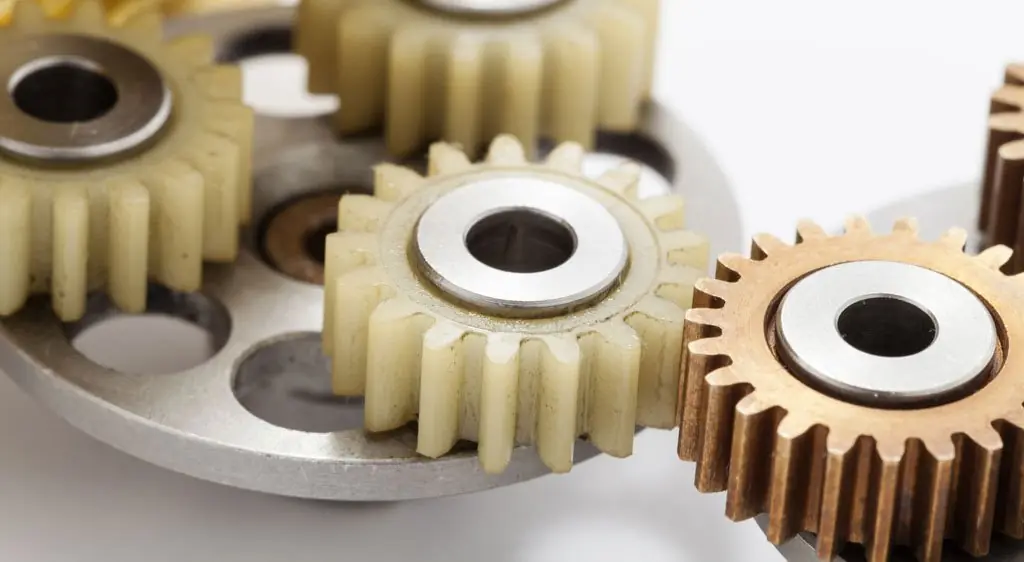
Metal replacement means converting a metal component into a part made from an engineering plastic, usually by injection molding. The main benefits are lower weight, fewer secondary operations, more design freedom, no rust and less noise, often with a lower cost per part in series production. It is not always possible: loads, temperatures and the operating environment have to be checked in a feasibility study.
High-performance thermoplastics can now replace metal in a wide range of applications. With metal replacement you can keep a product's technical characteristics and, in some cases, improve its performance and its cost-to-performance ratio. Aerospace, automotive, electrical and electronics, medical, robotics and home automation are all industries that have already seen the benefits of metal replacement.
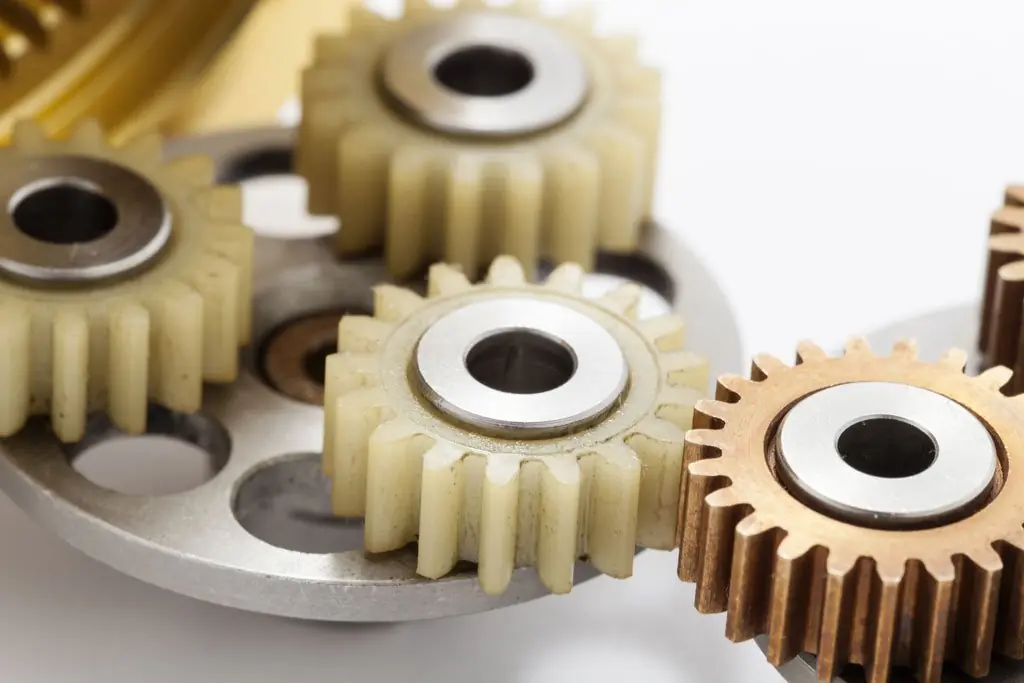
In this article we look at 10 reasons why metal to plastic conversion is worth considering.
A few essential caveats
First of all, metal replacement has to be assessed and analyzed carefully, and a thorough feasibility study is essential before anything else.
The plastic part must retain the functional characteristics of the metal part it replaces. Yet both the manufacturing process and the material will be very different from those used for the metal version.
Metal replacement may also require changes to the geometry and appearance of the part, for example ribs instead of solid sections, to get the most out of the plastic material. All of this, of course, without compromising performance or the final application.
Finally, replacing metal with thermoplastics is not always possible. Stiffness, creep (deformation under a constant load over time) and maximum service temperature are areas where metals still have the edge, and the feasibility study is exactly what tells you whether an engineering plastic suits the application.
Now let's look at the 10 benefits of metal replacement.
10 benefits of metal replacement: cost, appearance and performance
1. Lower energy consumption in production
As a rule, processing plastic takes less energy than processing metal. Engineering plastics are molded at much lower temperatures than the melting points of aluminum, zinc or steel, and a molded part does not need the machining typical of metal components. As a result, making the same component in plastic often cuts processing costs.
2. The finished part is lighter
A plastic part weighs much less than its metal equivalent: the density of engineering plastics, even glass-filled grades, is a fraction of that of steel and about half that of aluminum. In practice the weight of a component can be reduced considerably, in some cases by up to around 50%. For the same required performance, lower weight generally makes the product easier to handle and use and, as we will see in the next point, also reduces its environmental impact in service.
3. Lower environmental impact
In practice, a lighter component means a lower environmental impact during use. Think of vehicles: reducing the overall weight of a car, under the same operating conditions, reduces fuel or energy consumption and therefore CO2 emissions.
End of life matters too: many thermoplastics can be mechanically recycled, especially when the part is made from a single material and is easy to separate from other components. However, the overall environmental balance has to be assessed case by case over the whole life cycle of the product.
4. A mold delivers more shots
For the same number of cavities, a single mold can generally produce more shots for engineering plastic parts than a die can for metal die castings.
On average, an aluminum die-casting die lasts around 100,000 cycles, because the molten alloy subjects the die steel to severe thermal shock. A mold for thermoplastics, on the other hand, can reach 500,000 cycles with filled or modified materials, and up to a million cycles with unfilled materials.
These figures are only indicative: they depend on the project, the tool steels selected and how the mold is maintained.
5. More complex geometries are possible
Metal, whether machined, formed from sheet or die cast, imposes certain design and engineering constraints that limit the range of shapes that can be made at a reasonable cost. Injection-molded plastic, by contrast, offers more freedom and flexibility at the design stage: ribs, snap fits and functions that would need several metal parts can be combined into a single component.
6. Fewer production steps
With the right design, the part comes out of the mold with almost all of its features and finishes and needs no major secondary operations. A metal component, by contrast, often requires machining, deburring and surface treatment after the "base part" has been made. These operations are generally expensive in both time and money, and they make the component more costly.
7. Shorter processing times, so shorter lead time and time to market
Once the mold is ready, producing plastic parts is faster than producing metal ones: every molding cycle delivers a finished part, or several parts with a multi-cavity mold.
As explained in the previous point, with metal many operations are carried out after the "base part" has been produced, such as painting, surface finishing or engraving logos and graphics. With plastic, color, surface texture and logos can be produced directly in the mold.
A plastic part therefore has a shorter lead time, because it requires fewer production steps, and consequently a shorter time to market, the time between design and market launch. The time needed to build the mold has to be factored in, but it is a one-off.
8. Chemical properties: better resistance to corrosion from water and many chemicals
In contact with water and moisture, metal tends to oxidize and, in the case of unprotected steel, to rust. Engineering plastics, on the other hand, do not rust, and many of them withstand a wide range of chemicals: polypropylene, for example, resists battery acid, which corrodes unprotected metal. This is why plastic parts often need no anti-corrosion treatment such as galvanizing or painting.
Chemical resistance, however, depends heavily on the polymer: some materials are sensitive to certain solvents, and polyamides absorb moisture, which changes their stiffness and dimensions. The material should therefore be chosen for the actual operating environment of the part.
9. Physical properties: sliding behavior, impact resistance, thermal and electrical insulation, flame retardancy
There are many families of thermoplastics which, unmodified or with additives, give the finished part specific properties. For some of these properties, thermoplastics match or outperform metal: some materials offer good sliding and self-lubricating properties, such as POM, others outstanding impact strength, such as polycarbonate. Plastics are also thermal and electrical insulators and are available in flame-retardant grades for applications with fire performance requirements.
Stiffness and high-temperature resistance, on the other hand, still favor metals. To close the gap, glass fiber reinforced engineering plastics are used, such as glass-filled PA6, PA66 and PPA, together with a geometry designed specifically for plastic.
10. Metal is much noisier than plastic
It may seem a minor point, but noise should not be underestimated. In some environments reducing noise is essential, for example to protect workers' health. Lower noise also makes products more comfortable to use. Just think of a classic car: the many metal components that have since been replaced by plastic (such as bumpers or under-hood air intake ducts) made it noisier than a modern vehicle and prone to far more annoying vibrations, which plastic dampens better.
Conclusions
Where replacing metal is feasible, the benefits of metal replacement are clear, in terms of lead time and cost as well as weight and environmental impact during use.
At Bemar Plast we assess the feasibility of a metal replacement project, the material and the part geometry together with your engineering team. We design the mold in house, with mold flow simulations carried out by external partners, and we can check shape and fit with 3D-printed prototypes (FDM, SLA and MJF, through a qualified service provider in Italy) before the mold is built. Series production takes place in our plastic injection molding department on 13 presses from 10 to 480 t.
Contact us for more information.
Frequently asked questions
What is metal replacement?
Metal replacement is the conversion of a metal component into a part made from a high-performance thermoplastic, usually an injection-molded engineering plastic. The goal is to keep the part's function while reducing weight, machining and cost.
What are the benefits of replacing metal with plastic?
The main benefits are lower weight, fewer secondary operations, greater design freedom, no rust, electrical insulation and less noise. In series production the cost per part is often lower too, because the cost of the mold is spread over many parts.
Which plastics are used to replace metal?
Metal is mostly replaced with glass fiber reinforced engineering plastics such as polyamides PA6 and PA66 and PPA. POM is often used for gears and sliding parts and PC for impact resistance; the choice depends on loads, temperatures and the chemical environment.
Can every metal part be converted to plastic?
No: the stiffness, creep resistance and maximum service temperature of engineering plastics remain lower than those of metals. That is why a feasibility study should check loads, temperatures, chemical environment and regulatory requirements before the plastic part is designed.
Can Bemar Plast support a metal replacement project?
Yes: we review the material and part geometry with your engineering team, design the mold in house and mold the parts in Italy on 13 presses from 10 to 480 t. See our plastic injection molding page for details.